
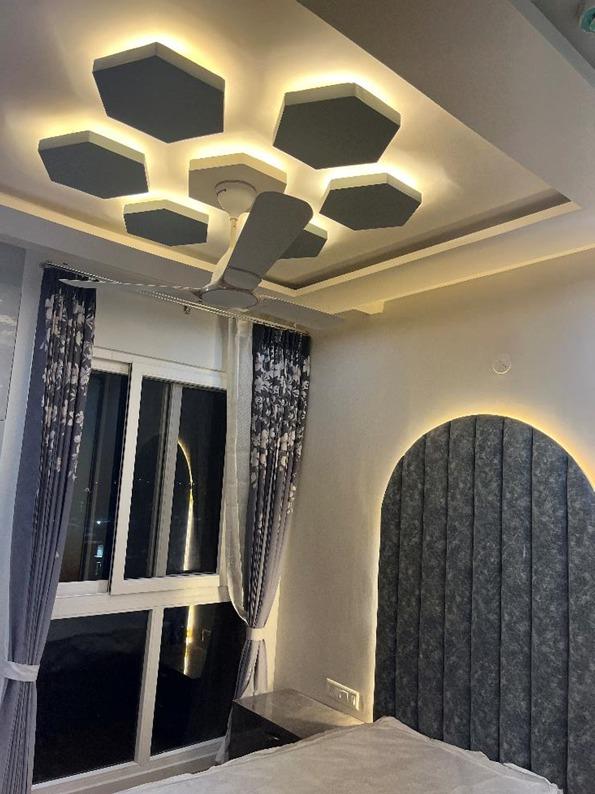
Gone are the days when false ceilings were all about elaborate patterns and fancy shapes. In today’s design language, simplicity with smart lighting is the real trend. False ceilings are now primarily used to support lighting — creating ambience, enhancing brightness, and hiding electrical work neatly.
The trend is clear: plain ceilings with layered lighting effects are in, and designer false ceilings are reserved only for specific design intents. Below are the most popular and practical false ceiling types you should consider today:
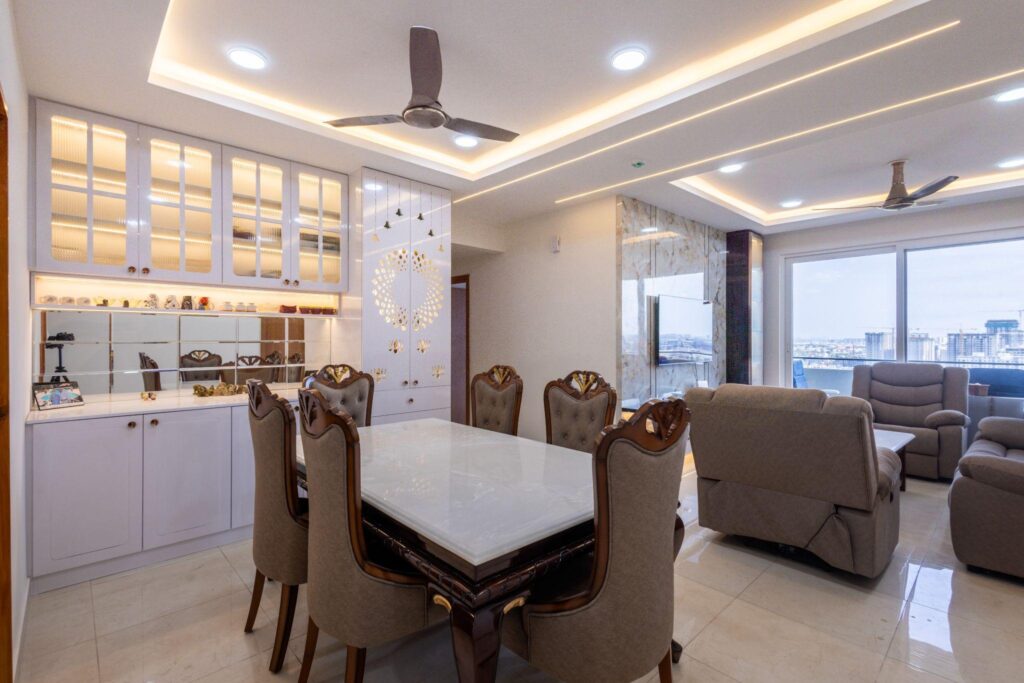
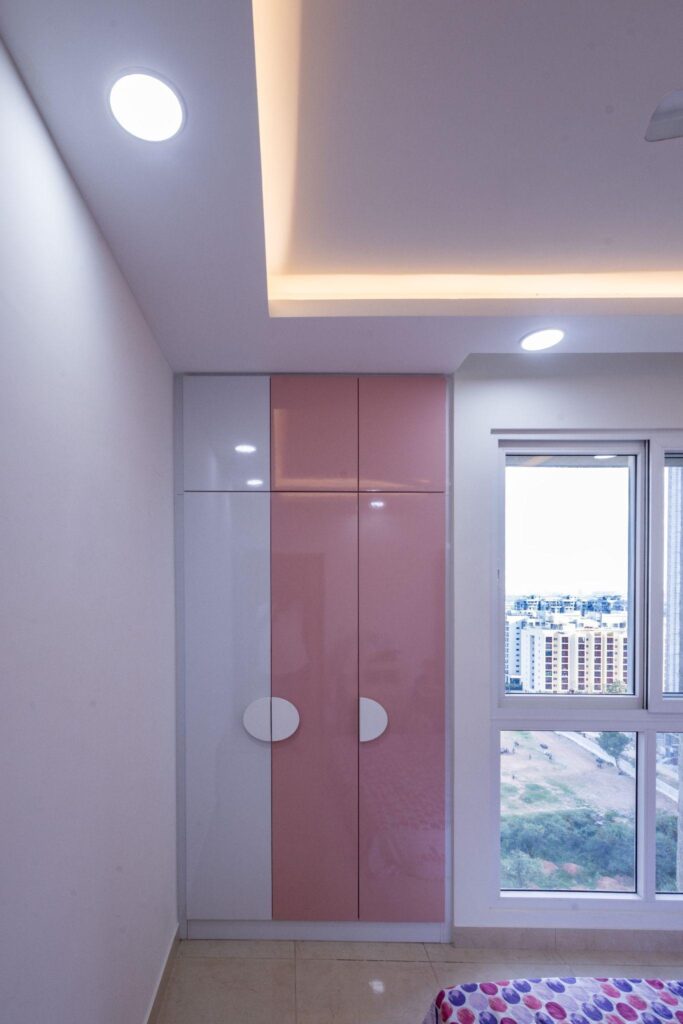
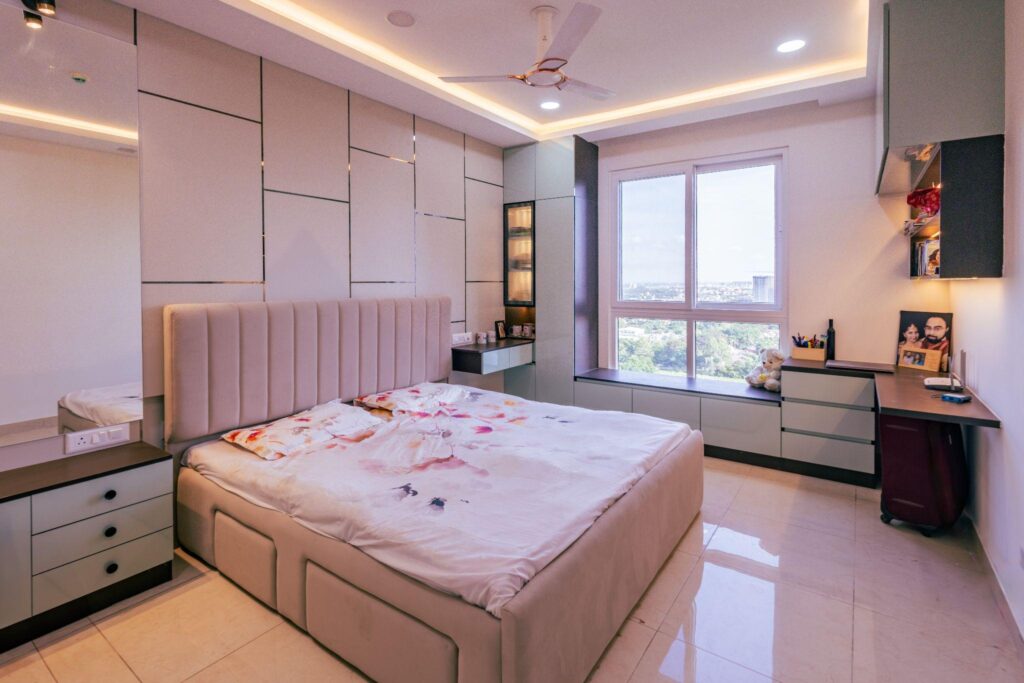
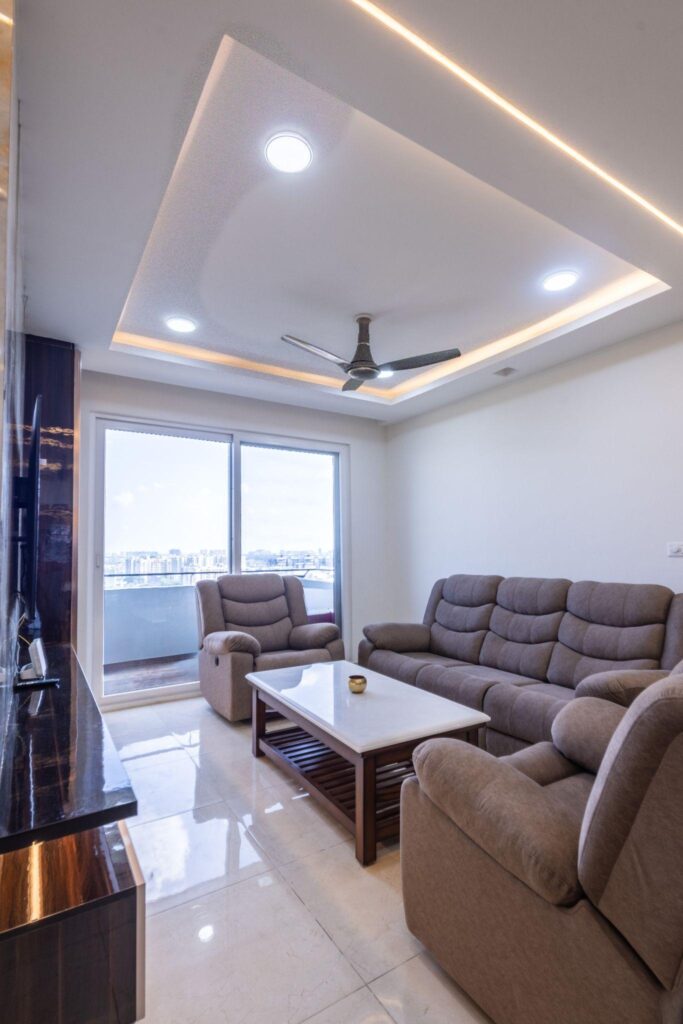
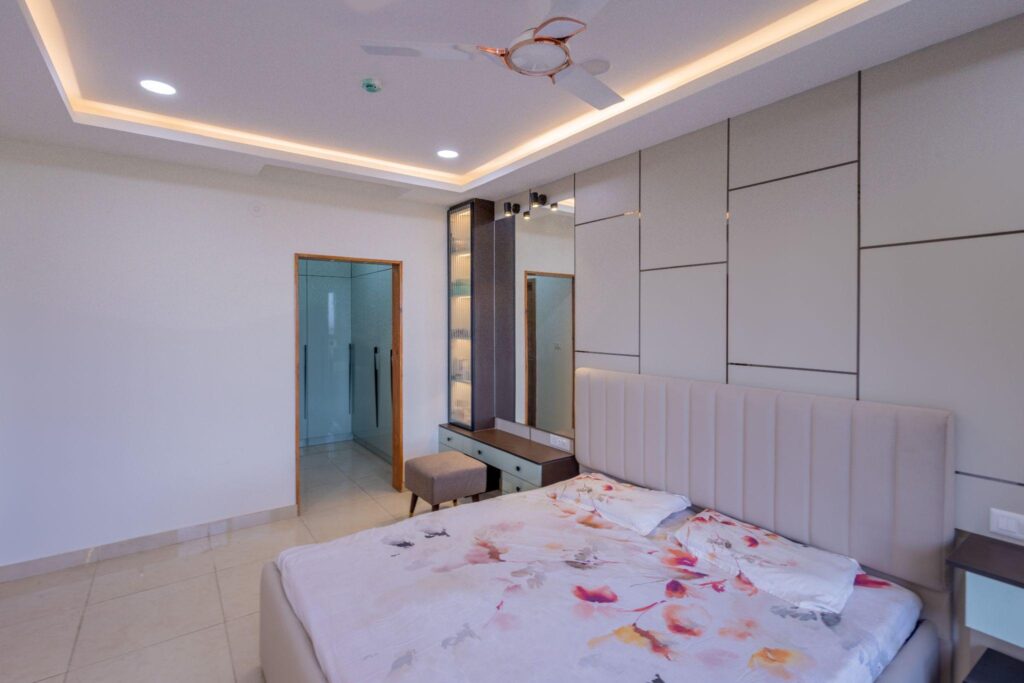
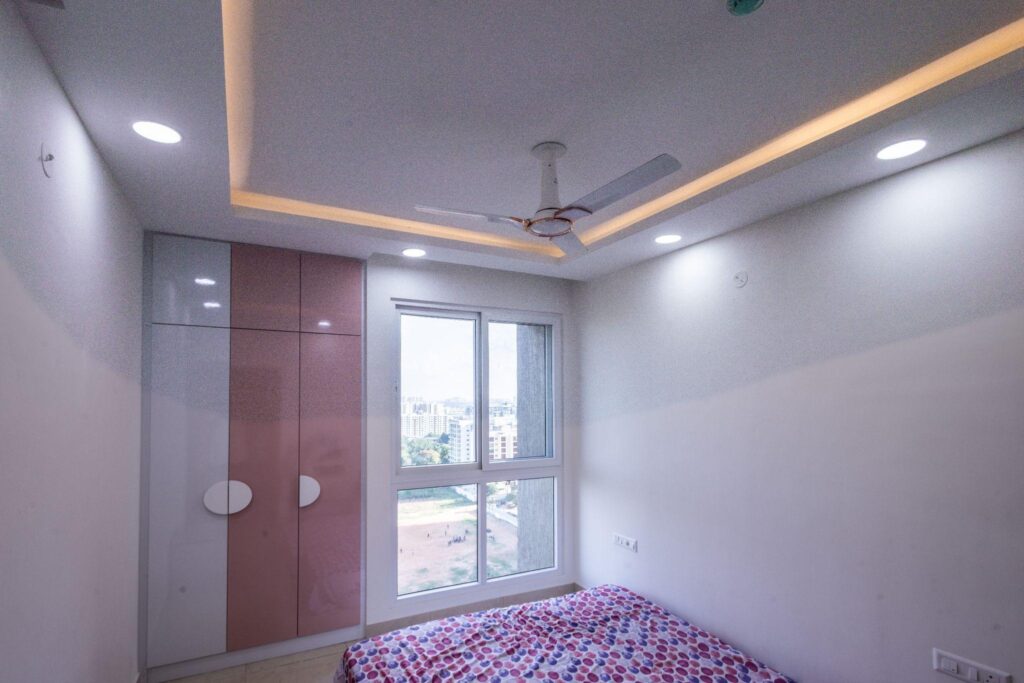
1. Peripheral False Ceiling
What it is: A false ceiling designed only around the border (periphery) of the room.
Purpose & Advantage:
- Used mainly to house cove lighting and panel lights.
- Gives a floating feel to the ceiling, especially beautiful when lit up at night.
- Great for small to medium-sized rooms.
Things to Note:
- For larger rooms, peripheral false ceiling alone won’t provide enough brightness. In such cases, we combine it with a main flat false ceiling in the center and then create the peripheral around it.
- The usual depth:
- Main ceiling: 4 inches
- Peripheral: an additional 3 inches down
Lighting Used: Cove lights (indirect) + Panel lights (for direct brightness)
Tip: Use separate lighting controls to adjust brightness levels and set the mood of the room.
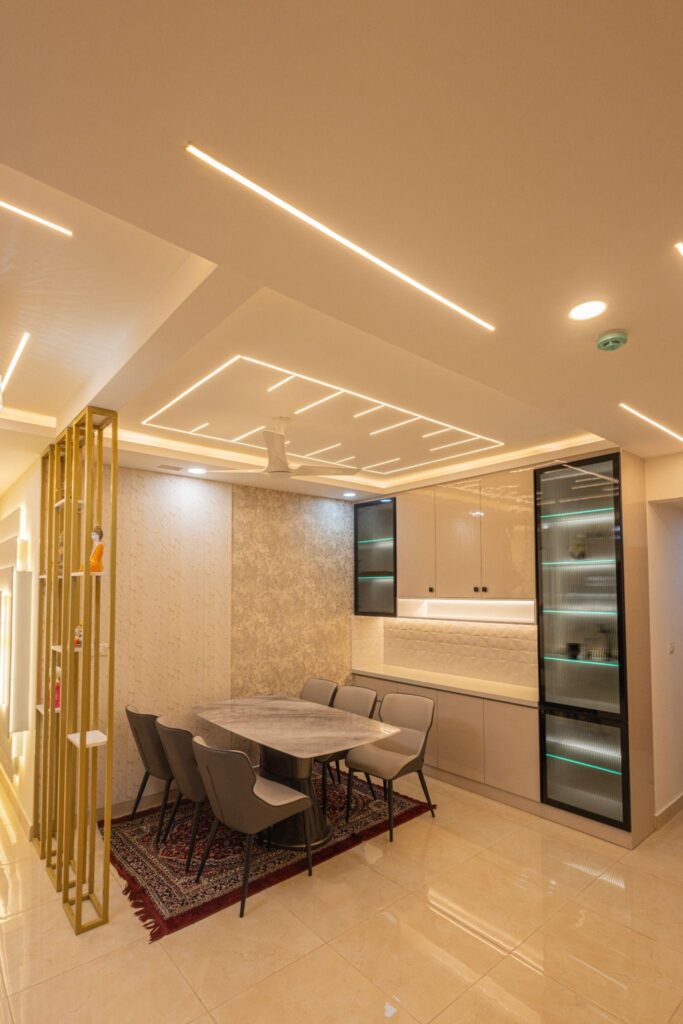
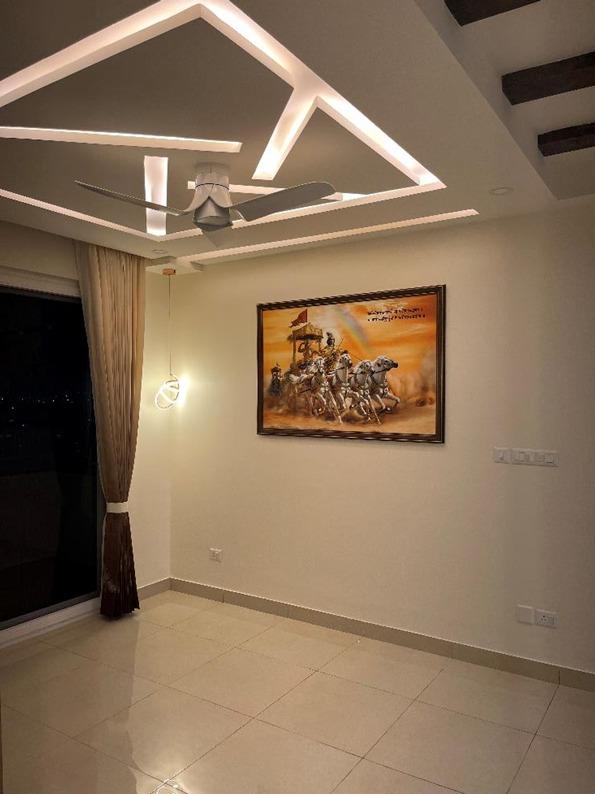
2. False Ceiling with Profile Lights
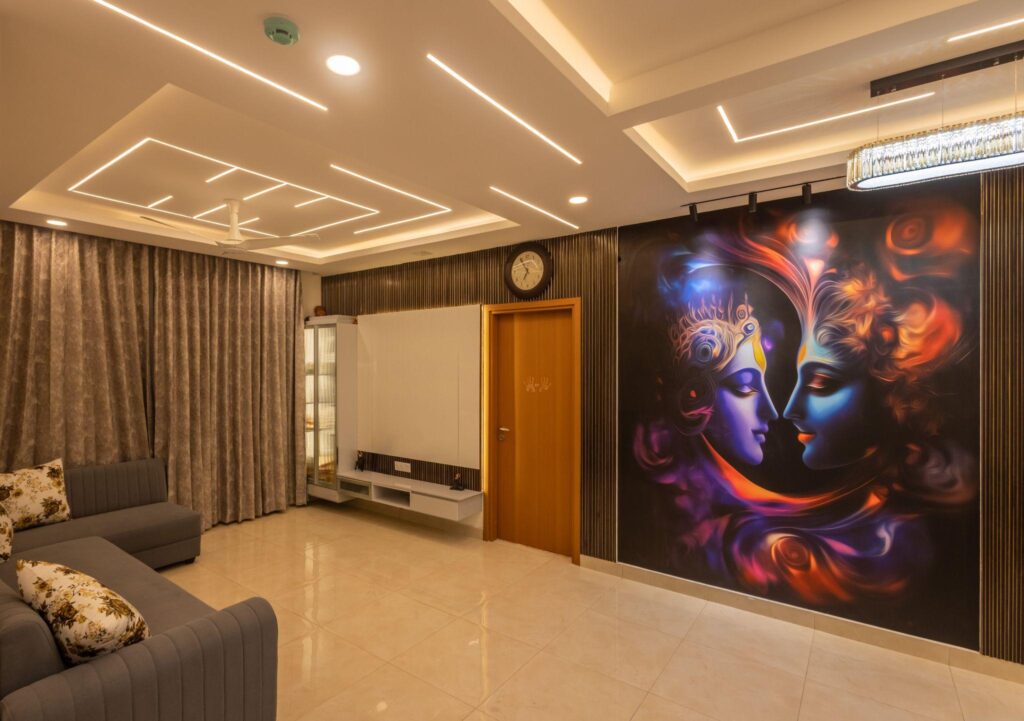
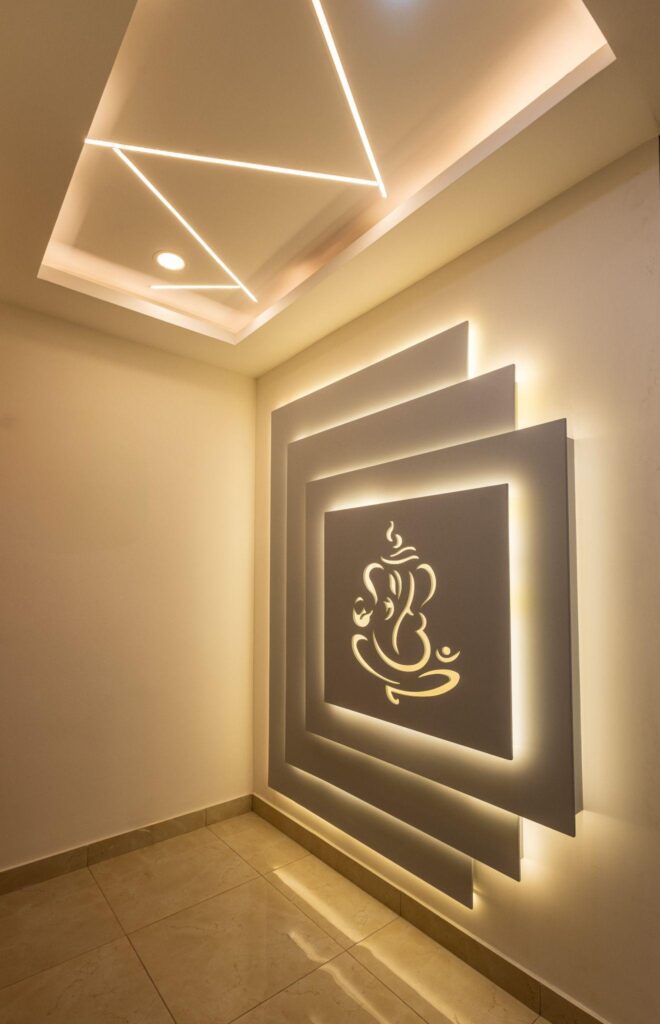
What it is: A modern ceiling style using LED strip profile lights in linear patterns — minimalistic yet striking.
Why it’s trending:
- Gives a sleek and futuristic look
- Highly customizable — profiles can be straight, diagonal, or criss-cross
- Works well for both homes and offices
Considerations:
- Avoid curves — though curve profile lights are available, they lack durability.
- Profile lights look fantastic when switched on, but off-state finishing might show minor imperfections around the edges due to joint issues, even with skilled teams.
Lighting Used: LED profile strip lights
Depth Required: 4 inches
Visual Impact: Works best in minimal and modern interiors where lighting acts as design.
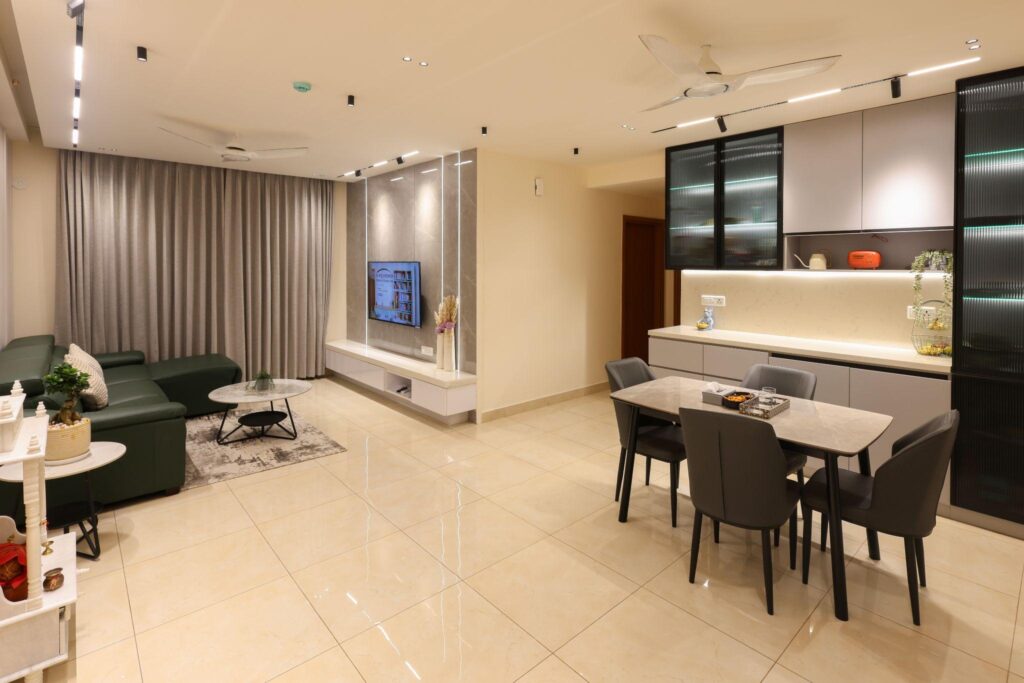
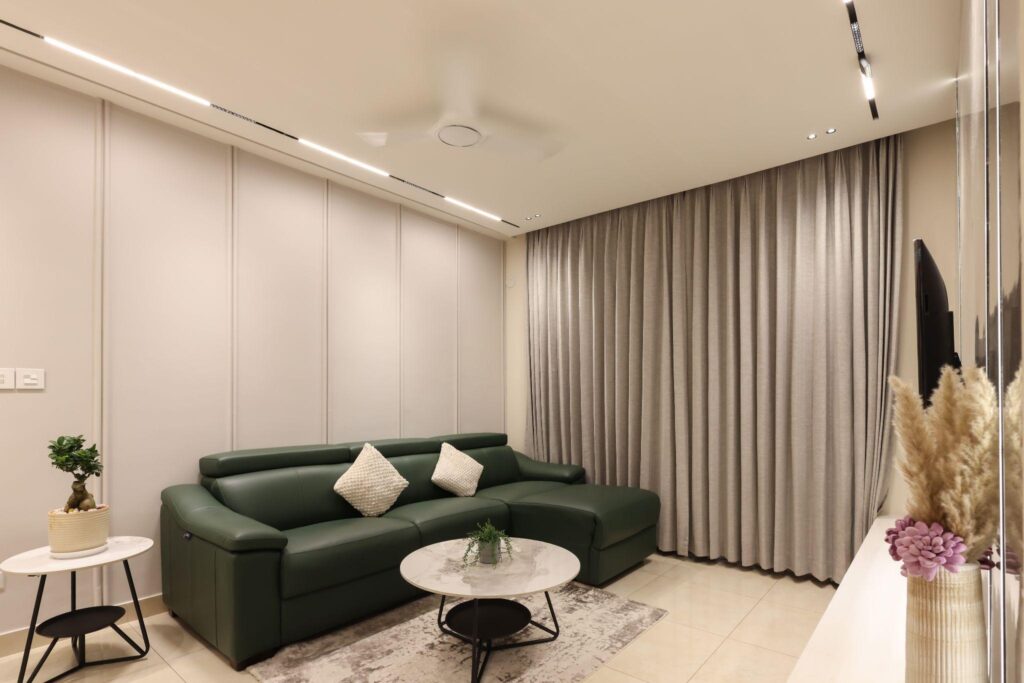
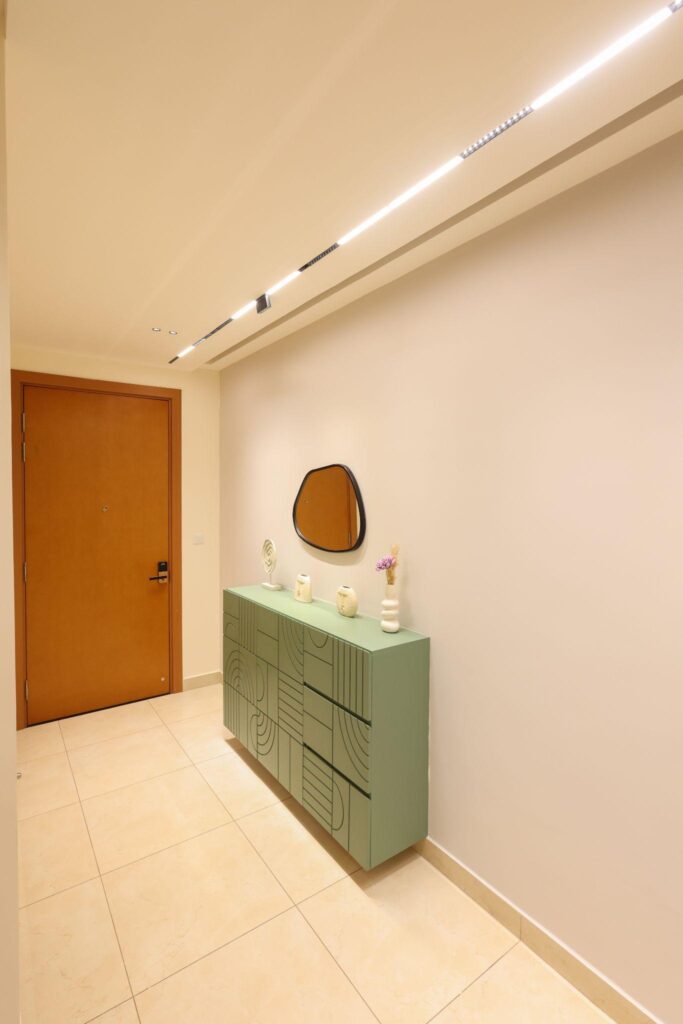
3. False Ceiling with Magnetic Track Lights
What it is: A sophisticated ceiling setup using magnetic track lighting systems where various types of lights can be snapped onto a single track.
Why it’s trending:
- Offers clean, seamless lighting runs across the ceiling
- Ideal for elongating a space visually
- Can integrate different fixtures — spotlights, diffusers, focus lights, etc.
Design Advantage:
- Mostly used in black tracks for a bold, classy look
- Although it offers flexibility, rearranging lights post-installation is rare
Combination Tip: Pair magnetic track with COB panel lights in between to enhance overall brightness and create a stylish lighting grid.
Depth Required: 4 inches
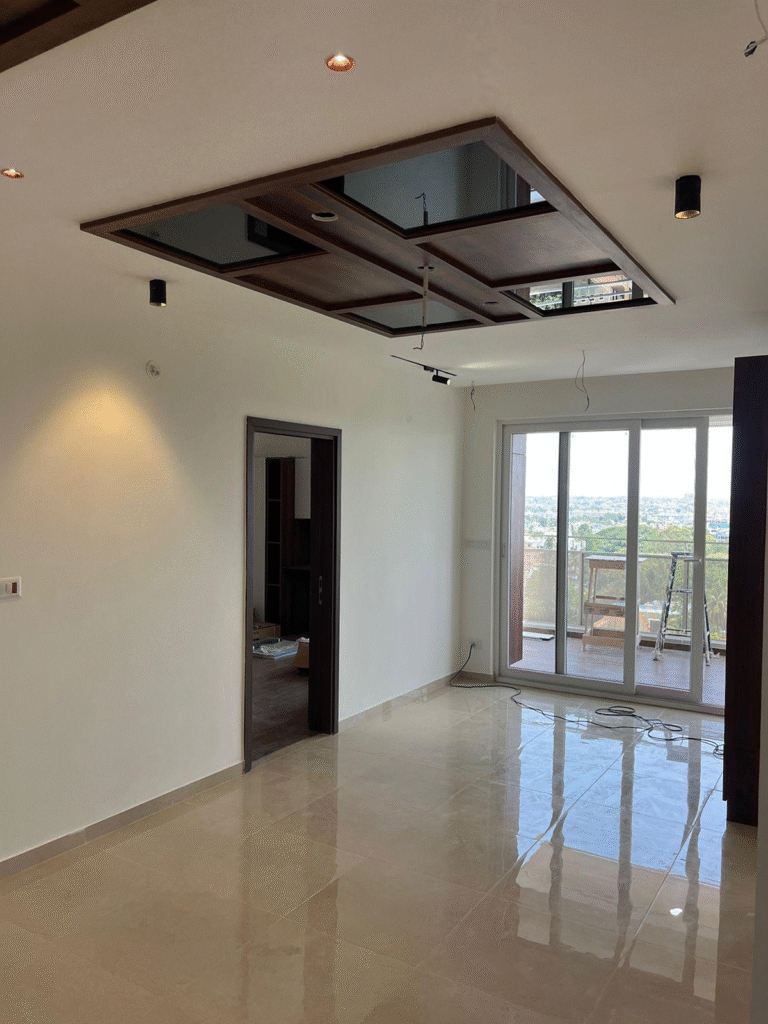
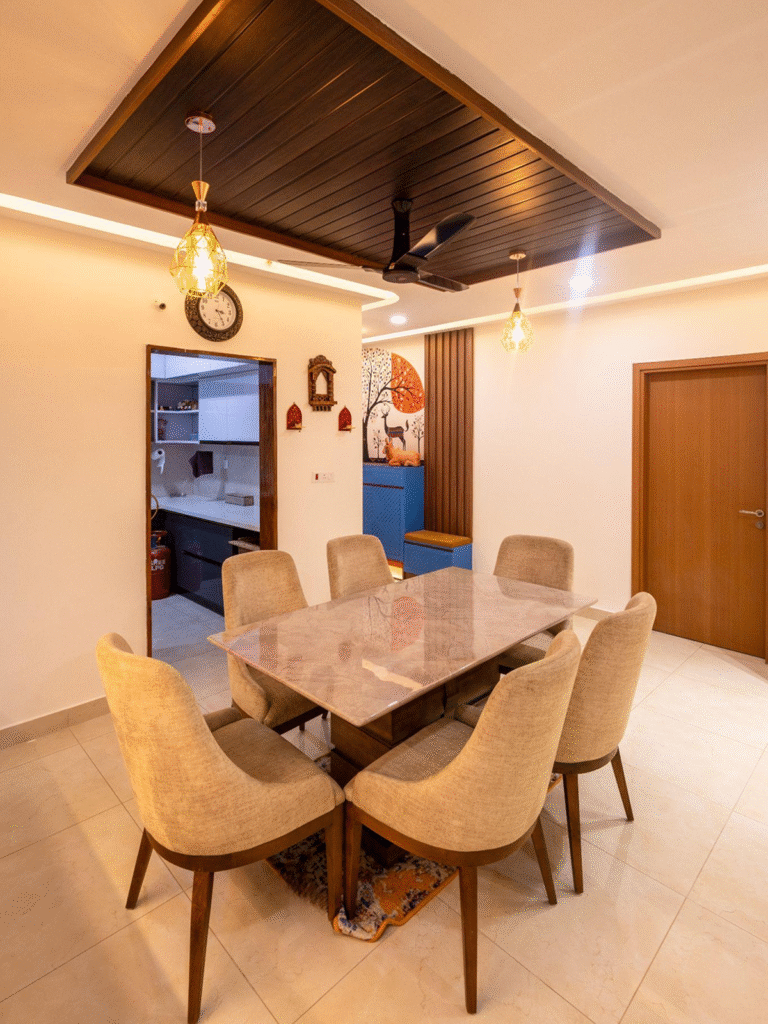
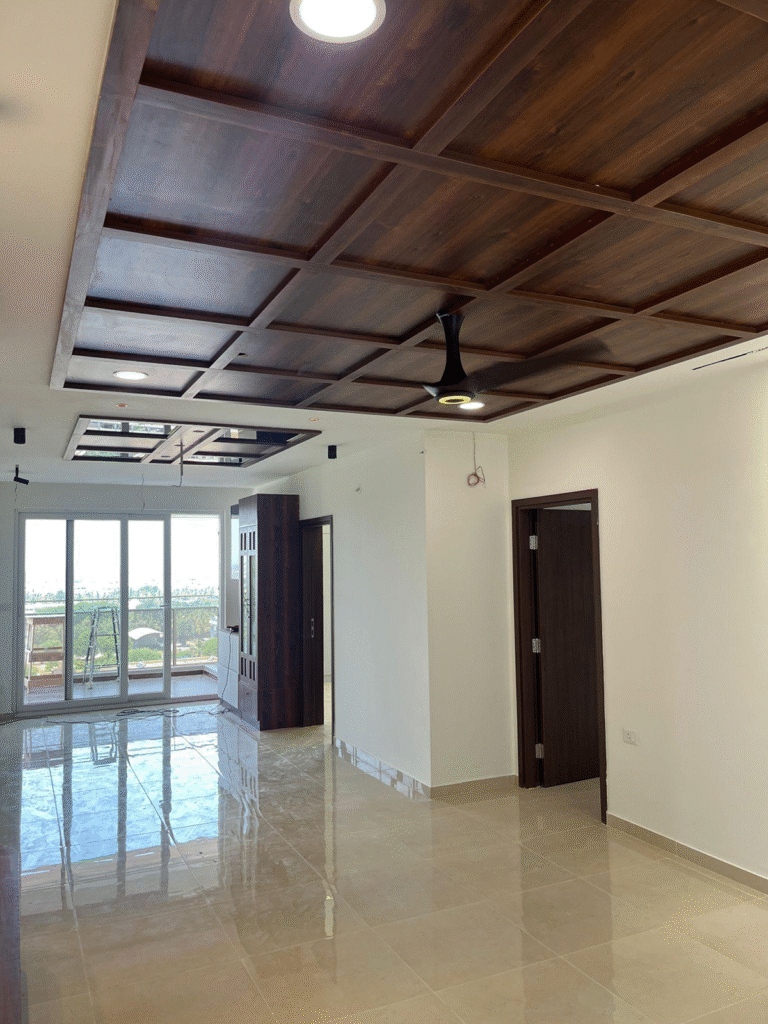
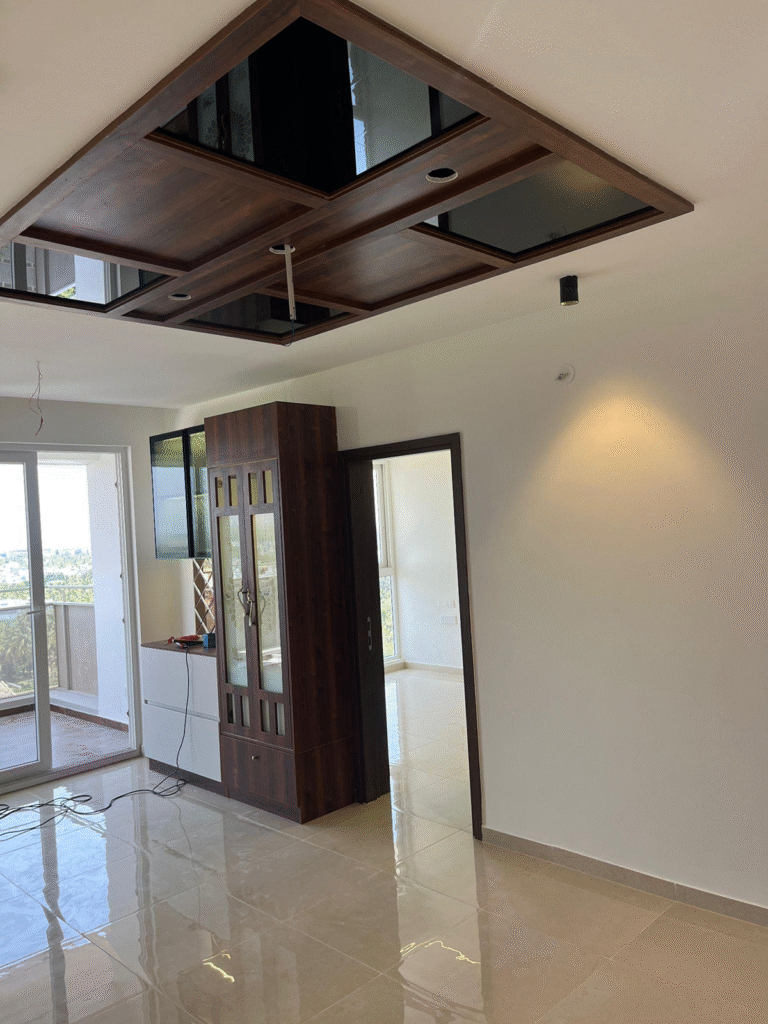
4. False Ceiling with Wooden Patterns
What it is: A fusion of gypsum ceiling with wood elements for a natural and warm look.
Options Include:
- Solid pine wood sections with polish for antique appeal
- WPC rafters in wooden finish for durability and style
- Wood-finish laminate ceiling panels for a budget-friendly option
Usage:
- Usually installed in feature areas like dining, foyer, or living spaces
- Surrounded by plain gypsum false ceiling to balance the look
Design Tip: Wooden patterns enhance luxury and provide texture — perfect for villas and earthy design themes.
5. Designer False Ceiling (Rare Use)
What it is: Intricately shaped false ceilings crafted from gypsum or POP — often custom-designed with waves, curves, or floral motifs.
Why it’s not trending:
- Doesn’t align with the current minimalistic style
- Costlier and takes longer to execute
- Only used when the interior theme demands a bold ceiling design
When to use: In showpiece areas like living rooms or if you’re designing around classical, Indo-European, or royal themes.
💡 Final Thought
“Lighting is to a false ceiling what salt is to a good dish.”
That’s the core idea behind modern false ceiling design. It’s no longer about flashy patterns, but about how intelligently the lights are placed to shape the space and mood.
For more details on lighting combinations and ideas, check out our Lighting Guide Blog.
📸 All visuals showcased are from our completed projects. For personalized design ideas, detailed pricing, or to schedule a site consultation — feel free to reach out to our team. Let’s bring your vision to life.